Read about Sølvkælderen’s history and the Birgit Vibeke Toft Memorial Foundation
Since time immemorial, silver as a luxury item has captivated people from town and country alike. Silver was something you furnished your home with and set the table with—something prestigious to own. For that reason, people also collected silver, for example as part of a so-called bridal trousseau. Sølvkælderen’s history begins in 1905, and the most important figure in the company’s more recent history was a woman named Birgit Vibeke Toft.
Birgit Vibeke Toft
In 1959, Birgit Vibeke Toft (1933–2017), aged 26, was employed at Sølvkælderen. The reason for her employment was that she spoke several languages. Silver became her destiny and her great love.
Through her daily work at Sølvkælderen for more than 58 years, “Miss Toft,” as she was called, certainly carried on an existing business, but through her tremendous efforts—also as its owner for more than 40 years—she created an institution. Birgit Vibeke Toft had no children, but always took deep joy in her work. After just four months of illness, she passed away in 2017. She was laid to rest on what would have been her 84th birthday, 30 November 2017. She worked until she fell ill, and Birgit Vibeke Toft had in fact cycled every day from her home on Kastrupvej to Kompagnistræde until two years before she died. She was a strong, capable, incredibly hardworking and well-liked woman, who was very humble. Birgit Vibeke Toft left a will stating that a memorial foundation was to be established in her name.
However, the story begins a few decades before Miss Toft arrived.
Sølvkælderen’s history
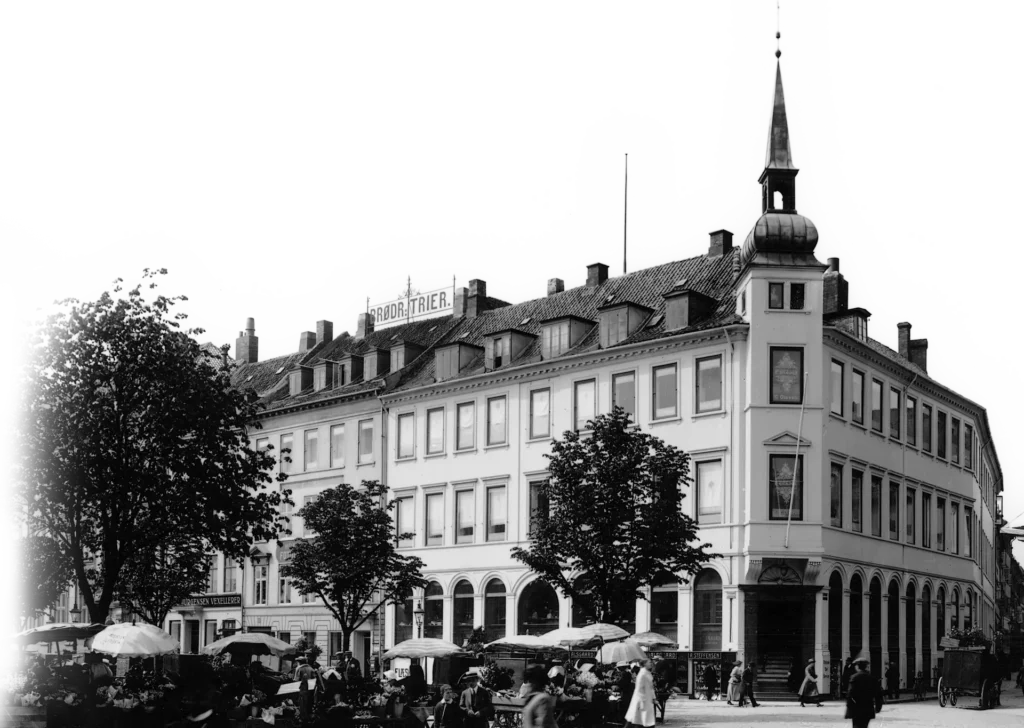
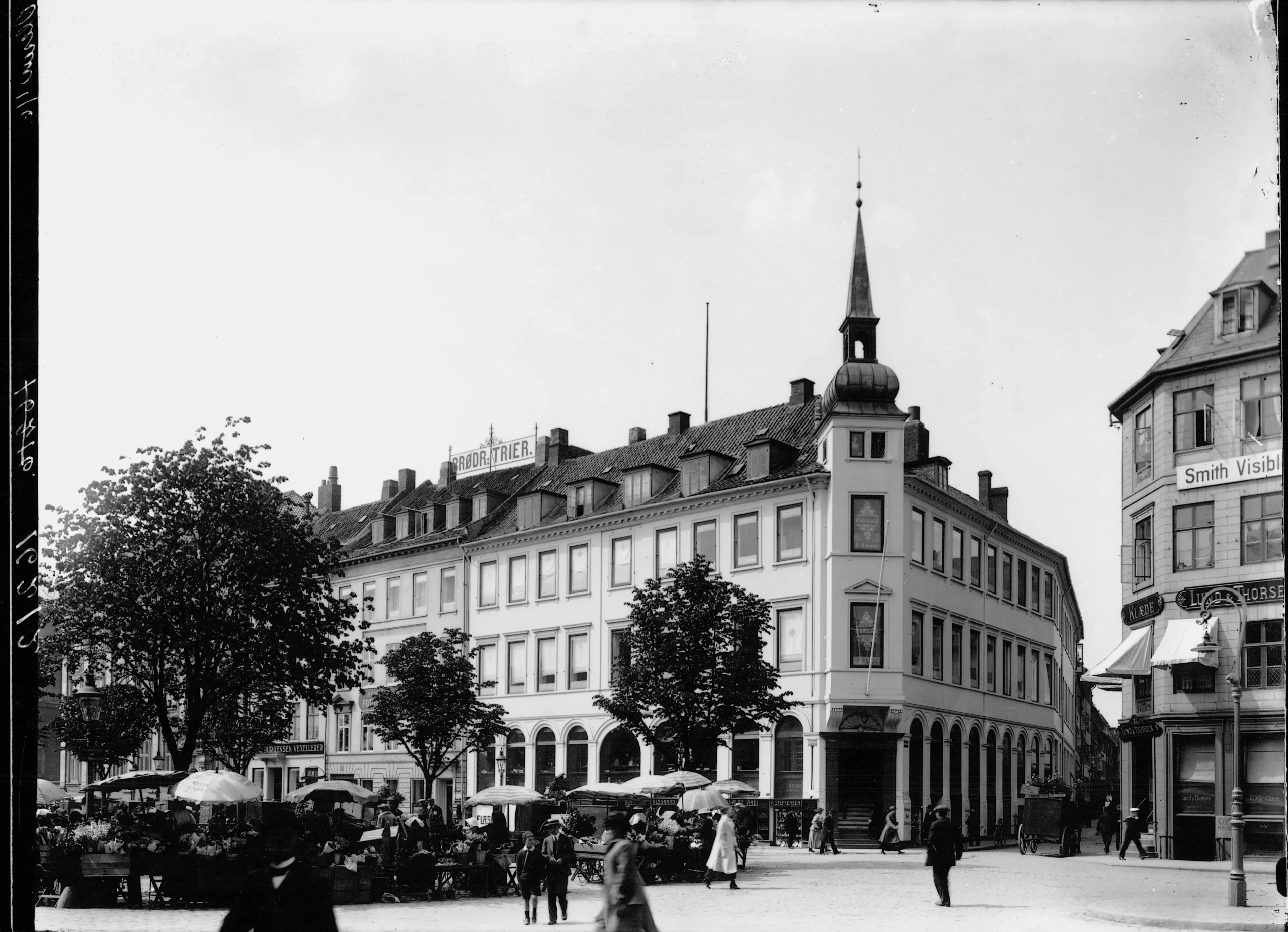
Of the silverware manufacturer Jacob Magnus Aage Steffensen (1876–1929), the son of a goldsmith, it is known that he was granted citizenship—at the time meaning the right to run a business—on 11 February 1902, with his own workshop in Lille Strandstræde, and that he was a member of the Copenhagen Goldsmiths’ Guild until his death. In 1905, he established Sølvkælderen on the corner of Højbro Plads and Læderstræde, which he ran until his death in 1929. According to the Trade Register, his widow Isabella Jensine Steffensen (1886–?) continued the business from 1930 as the company’s “sole responsible proprietor”. Isabella Steffensen registered a maker’s mark in 1937, and it was not deregistered until 1947. The widow presumably continued to run the business, with considerable assistance from a manager named Th.H. Jensen, who bought Sølvkælderen from her in 1937. However, Th.H. Jensen died a year and a half after the takeover. He is also believed to have been the father of Volmer “Volle” Jensen.
Aage Steffensen’s production was extensive. His silverware was most often stamped with a combination of his initial-rich full name: MAS, IAS, IMS and AS, and even A. Steffensen. As a silverware manufacturer, he specialised in pieces that stylistically looked older than they were—he would also sometimes supply them with antiqued versions of his own initials, which has deceived some collectors. The quality of his work was described as “uneven,” presumably because he also traded in works from subcontractors. In Christian A. Bøje’s book on Danish goldsmith and silversmith marks from before 1870—the primary source of knowledge about his life and work—Steffensen was described as a skilled craftsman, but because his production was so large and his stampings so misleading, he caused many collectors considerable trouble. However, Steffensen was never prosecuted.
According to the Precious Metals Control’s register of name stamps, the name stamp J.A.S, originally registered in 1905, was deregistered in 1937. That same year, the widow Isabella Steffensen registered the name stamp I. Steffensen; it was deregistered again in 1947. In other registers and archives, Sølvkælderen’s first telephone number can be traced; Kraks Street Directory for 1931 shows it as By177—and the same directory describes the shop as “Sølvkælderen v. I. Steffensen” in the period from 1932 to 1941.
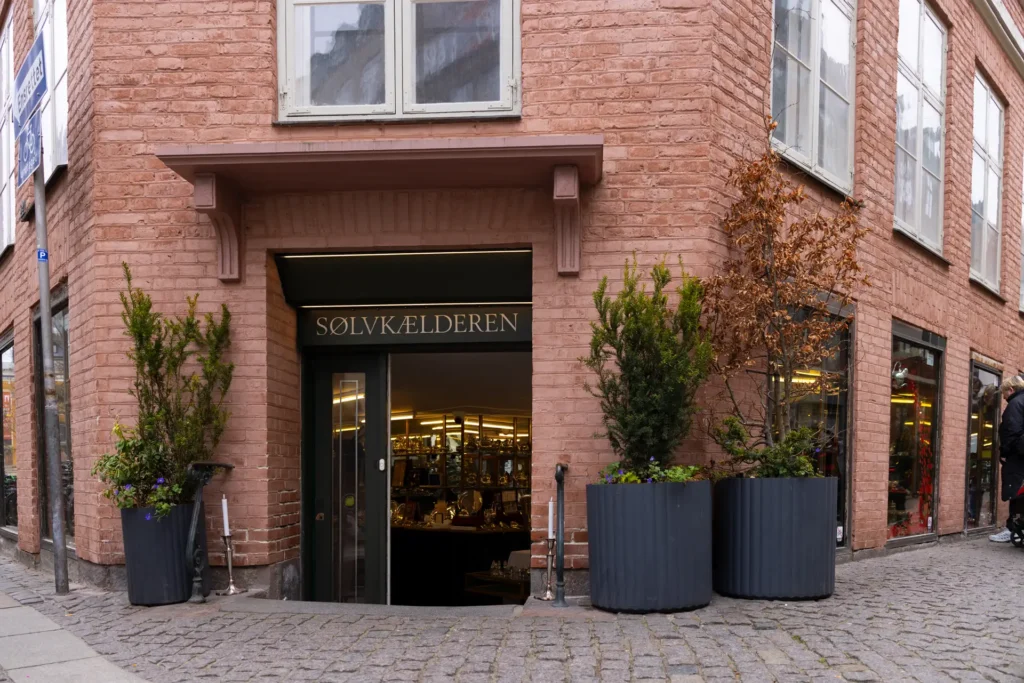
In 1945, the name Harald Hammer (1906–1987), described as “factory owner & Scandinavian pharmaceutical industry,” appears for the first time in Kraks Street Directory at Højbro Plads 4. Harald Hammer took over Sølvkælderen after 1954, and in 1957 he moved Sølvkælderen to Naboløs, where it eventually grew to the 13 windows the shop has to this day, at the address Kompagnistræde 1.
As sole owner after the silversmith Volmer “Volle” Jensen, Hammer then ran the business. Hammer liked to say that the shop was established in 1851, but a review of various city archives and registers has not been able to find evidence for the claim. Perhaps the year 1851 was the product of a vivid imagination, a businessman’s sense for a good story, or simply misinformation.
As the owner of Sølvkælderen, Harald Hammer employed the young Birgit Vibeke Toft in 1959, and so we are almost back at the starting point of the story.

About the memorial foundation’s logo
If you take a closer look at the Birgit Vibeke Toft Memorial Foundation’s logo, you will of course quickly notice the three letters BVT from Miss Toft’s name as well as an M for the memorial foundation—but also note that, together, the four letters form shapes and lines from different corpus.
Apply to the Birgit Vibeke Toft Memorial Foundation
Each year, the board of the Birgit Vibeke Toft Memorial Foundation endeavours to award several grant allocations, which go to projects that promote interest in silver—and in addition as support for art and culture.
Examples of projects supported by the Birgit Vibeke Toft Memorial Foundation
Exhibitions:
2026
Danish Silversmiths’ 50th anniversary exhibition
The exhibition “Habitat” by Tina Gjersen-Sav
Exhibition at Gavnø Castle, To the Ball at the Castle
Faaborg Museum, special exhibition “The Things Between Us”
O-Overgaden, Institute of Contemporary Art, winter exhibition in 2026.
2025
D’Angleterre in Noble Glimpses
2022
Exhibition at Rungstedlund, Silver tales
Examples of other supported purposes:
- Project “Denmark’s Silver Museum” at Museum Kolding
- Grants for graduating students at the Royal Danish Academy of Fine Arts Schools of Visual Arts, the Jutland Art Academy, and the Funen Art Academy.
- Various grants to individuals in connection with promoting the silver craft or visual arts.
- Donations for humanitarian purposes, e.g. Doctors Without Borders, the Christmas Seal Foundation, the Mental Health Foundation, etc.